Thursday, August 13, 2009

The Catlins


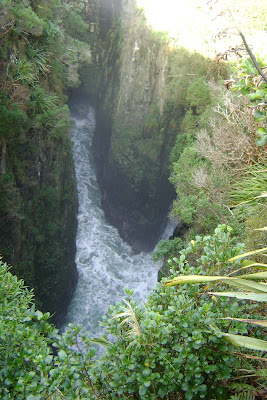
Matai Falls

The day after arriving at Marama farm, I was invited to go on a day's outing to the Catlins, a corner of the country that many people have said was worth going to. I had decided to forego that trip earlier, knowing I was running out of time, but here was the offer, popping up out of nowhere! I decided to take it. So with Sonya (one of the girls living on the farm) and her friend Nadia, we headed off to see some of the sights.


Horseshoe Falls

Close to Jack's Blowhole

Jack's Blowhole

Below: a live visit of the blowhole

On the way to the lighthouse


Nugget Point Lighthouse

Nugget Point

Below: Nugget Point on a sweeping scale

All in all, a nice day's trip with some nice girls as well. It wasn't too cold that day and for all of these places, we had to walk a bit to get there. Fresh air and exercise! Thanks to the Catlins and Sonya!

Saturday, August 8, 2009

Wildlife Adventures - Otago Peninsula


I took a wildlife tour with Elm Wildlife Tours, a guided tour of the only albatross colony on land (inhabited land) a shag colony, a fur seal colony, a sea lion colony and a blue and yellow-eyed penguin colony. It was an afternoon of awesome sights!

Albatross are not easy birds to view, especially this time of year when most are out at sea. A real sea bird, albatross spend most of the year literally living out on the sea. They are the world's largest sea bird, with a wingspan of up to 3 meters! Very cool! We saw only a couple pretty far out with the aid of binoculars.

The spotted shag colony is quite cool because during breeding times their faces take on an iridescent green sheen. You can't really see that with the pictures I took, but I promise it was cool. As we were looking out to sea at one albatross that was sitting in the ocean, we saw the unmistakeable spouts of whales in the distance. It was really cool! But that was the extent of what we saw of the whales.


Shag Colony


Afterwards we went to a private sheep farm on the edge of the Otago Peninsula. This farmer has the distinct luck of having colonies of seals, sea lions and penguins on his land! He's agreed to allow people like me go out there and view these animals in their natural environment through the Elm Wildlife Tours company. It was really cool. Some pics!


Cute as!

Playing dead! I really thought it was dead for a while because of the awkward position it was in, until it finally moved. Thank God! I was getting worried! Apparently fur seals have really maleable bones and can be comfortable in the most awkward of positions.


Taken through the binoculars. Pretty cool, huh?


Yellow-eyed penguins are the rarest penguins in the world. They are also very shy and very private penguins. They nest up in the brush, quite different from other penguins.

Isn't it cute?
Then we encountered the sea lions! Wow! This one below was yawning. Too bad it didn't come out clearly but pretty impressive nonetheless!


Here he is posing (in fact he is going to the bathroom and we were subject to this "private" moment). Didn't seem to bother him too much!


I was less than 2 meters away from him!


Below: a little vid of this young sea lion.


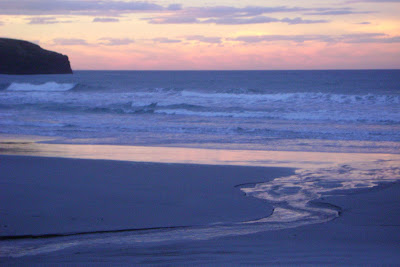
Evening on the beach. Ahh....peaceful.


A yellow-eyed penguin coming home for the night

Below: coming home


All coming home

Below: a love match or a territorial dispute?

Dunedin


Dunedin Train Station

I went to Dunedin on two separate occasions, but only did a bit of visiting the first time around. Some travelers had described it as nothing special, but I found it really charming, with pretty buildings and an interesting city center. The downtown area is called the Octagon and is actually shaped in that way, with two main streets forming an inner and an outer Octagon. Sitting at one of the many cafes in the Octagon is a good way to people watch and get a feel for the city.


I stayed at a backpackers called Hogwartz (obviously named after Harry Potter), only really worth noting because of its beautiful architecture and sense of isolation within its walls. Its located in a wooden area, but close enough to the center of the city as not to feel cut off. Dunedin, as many cities in New Zealand are, is quite hilly so expect to puff a bit. Good exercise though!

Hogwartz backpackers


One of tons of cathedrals in this city


The Otago Museum is a must see museum, rife with exhibits from around the world as well as some interesting facts about the Ngai Tahu Iwi of the South Island and extinct birds of New Zealand's past. I skipped over the stuff not directly related to New Zealand because I didn't have the energy to see every exhibit, but even the two exhibits I did see took me a couple of hours (and I didn't comb through every single thing as I usually do).

It was fascinating to learn about Moa, the largest flightless bird in the world, and other flightless birds that have become extinct since the arrival of Maoris. An interesting and somewhat unbelievable fact about New Zealand is that apart from the bat, New Zealand does not have any native mammals. This is why there was such a high concentration of flightless birds here. There were no natural predators so they thrived. Really cool exhibit!


Back in the Octagon is the Dunedin Public Art Gallery and they had an exhibit on Dunedin born Frances Hodgkins. I wanted to see what she was about. She was a watercolor painter who went and made it big in Europe in the early 1900s. There were quite a few things that I loved, but again I couldn't find most of them on the internet. Isn't that just a pain in the butt?

Hope you do like what you see below!


Thursday, August 6, 2009

Oyster Catching

After going to Ulva Island, I had enough time to get some food before walking over to the boat where Jack was waiting with a bigger crew than I expected. Here's our day!

Jack at the wheel and Mark (or dingo, as some call him since he's from Australia)

Below: Introduction to oystering


Jack's boat

Below: pulling in the net


Some collateral damage; we threw them back into the sea

Hermit crab

An oyster!

Mollymawk (in the albatross family)


Gotta love this picture and the flaunting of authoritative signs!

Below: And now for the piece de resistence!

Later on, Maria and I (a girl I had met at the backpackers) were invited to Abel's place for Paua (abalone).

Paua is prepared in a special way. After taking it out of it's shell, you must pulverize it by beating it with a hammer or something hard to tenderize it. Afterwards you can slice it like below.

Below: Cooking up Paua


All in all a wonderful day! I love food!

Saturday, August 1, 2009

Ulva Island

Moody sky (I love days like this!)

Weka in natural setting


One of the reasons I went to Stewart Island was to see the bird life. Ulva Island, a small island just a few minutes away from Stewart Island by boat, is a bird sanctuary that is rife with bird life not found in other parts of the world. What's more, you can actually get pretty close to them here, though they are completely wild. I did my best to take pictures and videos, but as with the world of the wild, you never know where they'll go next or how the shot will turn out. In some of the videos, it's best to listen rather than look at the grainy scene.

Docking at Ulva Island


Tomtit

The bark on this tree has been stripped by kakas, a native New Zealand parrot (red and gray)


On the rocky shores

New Zealand wood pigeon, apparently the largest pigeon in the world

Tui


Below: Tui Singing (absolutely unique and inspiring)


Below: I believe this is a juvenile New Zealand Saddleback, not sure though!

Below: The inquisitive nature of the Stewart Island Robin


Below: The song of the bellbird